Showing posts with label Philippa Gregory. Show all posts
This book is part of a two parter really, even though the story kind of stands on its own, it is the follow up to Earthly Joys. Where the first book follows the John Tradescant the Older in his career as gardener to the King, this book follows his son who inherits his father collection of plants and also his love and skill with the.  John however gets to travel to America in search of new plants where he meets native Indians and falls in love with their lifestyle. 

 As usual Philippa Gregory writes with style and grace, and I found myself falling into the story and living the adventure.


I can't tell you how much I loved this book.   As someone descended on my father's side from the African slave trade this book really spoke to me. 

One of the things I liked was that although Ms Gregory doesn't gloss over the brutality that the slaves endured nor does she belittle it or trivialise it a the same time she doesn't dwell on it, she doesn't leave you believing that the violence and cruelty are all that the slaves are about, yes they suffered, yes they were mistreated but the book doesn't leave you with the impression of broken destroyed people who had nothing at the end of it. As people they aren't defined by the ill treatment.

In fact the book leaves you with a sense of just how strong and determined the slaves were, determined to survive, to move on and to build a new life. And for me that was a positive thing. 

I also liked that Ms Gregory shines the light on the slave trade in England, that is very often totally ignored and the concentration is usually on America,  but England did have a slave trade and made a lot of money from it before Wilberforce campaigned against it.

The gentle love story between the frustrated Francis Scott and Mahuru was I imagine supposed to be the focus of the book but I suppose because of my own history and leanings I didn't find myself getting too absorbed in it.  In some ways it was refreshing as the love story is usually supposed to be between the man and the slave girl.
I did also like the fact that the book reveals a snippet of information that a lot of English people don't realise in that people of black African origin remained in the UK after slavery was abolished and built lives, married into the population and had children here long long before the emigrations from the West Indies of the 1950's and '60's


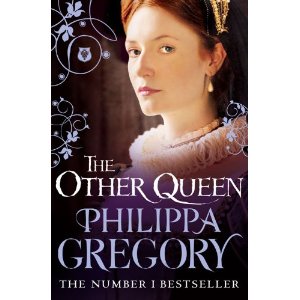
I struggled with this book right from the very start,  I think for starters that my view was coloured by my own historical knowledge of Mary Queen of Scots.   It could also be the whole rampant Catholic thing,  I'm not a believer and therefore struggle with the concept of religious fervour.

Philippa Gregory as a writer does her best and you can't fault her historical knowledge, it's all there from Mary's early days to her disastrous return to Scotland and her imprisonment by her cousin Elizabeth all the way to her final execution.

I can't say I would recommend this book as a "must read" more of an ok if you have a few spare days you want to fritter away then fine go for it.

So what's wrong with it?  Well mostly its a history problem if anything, Mary isn't the most likeable character in history and she wouldn't have actually made a good Queen, from historical references she was a weak, vain woman who made some rather large mistakes but Ms Gregory doesn't seem to be able to make up her mind in her writing if she likes Mary at all or not either.

I also found the Earl of Shrewsbury to be a bit of a wimpy character, he slopes about mooning after Mary which seeing as he was a married man and his wife was also Mary's Gaoler made me cringe a bit in embarassment for the poor woman married to him. 

Not the best Philippa Gregory Book I've read to be honest.

I was really looking forward to reading this book,   I finished The White Queen, the previous book to this one and had enjoyed it, even if I did find some of the airy fairy witchcraftery a bit repetitive... but I am a Philippa Gregory fan on the whole, the relaxed historical fiction usually has enough historical fact and attention to detail as well as just enough fiction to make it enjoyable.

But I have to admit The Red Queen was a struggle for me,  it's not Ms Gregory's writing... or maybe it is but I found the main character Margaret Beaufort really hard work.  The story follows exactly the same events of history as The White Queen but from the other side of the battle and that part of the idea was really interesting, seeing just how "right" both sides think they were and how actually they both claimed to be fighting for exactly the same thing and both claiming that it was "gods will".  

For me the big question there is... who is to say what exactly God's will is and how do they know???    It must be a very comforting to be so convinced that you know what God wants.

The book follows Margaret Beauforts life from her earliest childhood where from the very earliest time in her life it is made clear to her that she is merely a pawn in the political games of others and that she in and of herself is of very little value apart from her station in life and her only task is to produce a male heir for the House of Lancaster. 

I don't suppose I should be surprised that this unwanted unloved child found her only comfort in her religious beliefs and being that pious should have made her likeable... but it doesn't. Throughout the book I found her bitter and jealous, vengeful and filled with venal pride, all of which she tries to say is God's will.  She spends most of her life on her knees praying and yet doesn't seem to recognise that the way she behaves and her vengence and jealousy are sinful! There were times that I found myself flinging the book down and muttering "what a hypocrite".

By the end of the book I actively disliked the woman, which is a shame as I didn't want to.  But in some ways that's not a bad thing, the whole point of a story is to get across the characters that are being written about and in this case Ms Gregory nailed it if what she intended was to make Margaret Beaufort out to be an angry, bitter, jealous, spite filled woman whose whole life was an endless stream of disappointments.