An excellent knitting book for the inexperienced knitter,  the book contains 20 handknit projects all very simple in design and using very basic techniques on the whole.

You will find some slightly more challenging patterning but mostly it is in the form of embellishments and patterns.  But there are enough very simple patterns to get a new knitter started.  by the time you've completed some of the really simple ones you will feel confident enough to tackle adding the embellishments.

All of these Erika Knight designs are knitted in natural fibres, cotton yarns, bamboo, baby cashmerino.  You can substitute these for ordinary acryllic 4ply and double knitting but you need to be aware of the changes that will make in tension. So make sure you do swatch tests first.
I can't tell you how much I loved this book.   As someone descended on my father's side from the African slave trade this book really spoke to me. 

One of the things I liked was that although Ms Gregory doesn't gloss over the brutality that the slaves endured nor does she belittle it or trivialise it a the same time she doesn't dwell on it, she doesn't leave you believing that the violence and cruelty are all that the slaves are about, yes they suffered, yes they were mistreated but the book doesn't leave you with the impression of broken destroyed people who had nothing at the end of it. As people they aren't defined by the ill treatment.

In fact the book leaves you with a sense of just how strong and determined the slaves were, determined to survive, to move on and to build a new life. And for me that was a positive thing. 

I also liked that Ms Gregory shines the light on the slave trade in England, that is very often totally ignored and the concentration is usually on America,  but England did have a slave trade and made a lot of money from it before Wilberforce campaigned against it.

The gentle love story between the frustrated Francis Scott and Mahuru was I imagine supposed to be the focus of the book but I suppose because of my own history and leanings I didn't find myself getting too absorbed in it.  In some ways it was refreshing as the love story is usually supposed to be between the man and the slave girl.
I did also like the fact that the book reveals a snippet of information that a lot of English people don't realise in that people of black African origin remained in the UK after slavery was abolished and built lives, married into the population and had children here long long before the emigrations from the West Indies of the 1950's and '60's


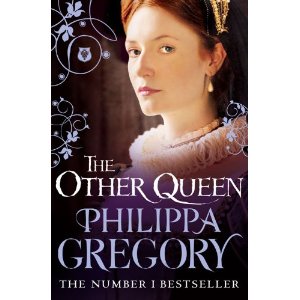
I struggled with this book right from the very start,  I think for starters that my view was coloured by my own historical knowledge of Mary Queen of Scots.   It could also be the whole rampant Catholic thing,  I'm not a believer and therefore struggle with the concept of religious fervour.

Philippa Gregory as a writer does her best and you can't fault her historical knowledge, it's all there from Mary's early days to her disastrous return to Scotland and her imprisonment by her cousin Elizabeth all the way to her final execution.

I can't say I would recommend this book as a "must read" more of an ok if you have a few spare days you want to fritter away then fine go for it.

So what's wrong with it?  Well mostly its a history problem if anything, Mary isn't the most likeable character in history and she wouldn't have actually made a good Queen, from historical references she was a weak, vain woman who made some rather large mistakes but Ms Gregory doesn't seem to be able to make up her mind in her writing if she likes Mary at all or not either.

I also found the Earl of Shrewsbury to be a bit of a wimpy character, he slopes about mooning after Mary which seeing as he was a married man and his wife was also Mary's Gaoler made me cringe a bit in embarassment for the poor woman married to him. 

Not the best Philippa Gregory Book I've read to be honest.

Stephen King is really the writer of my youth,  he is one of the authors that whet my appetite for the written word, I started reading King novels in my early teens and when I say early  I mean 11.  I was happily working my way through Jubilee Gardens Library and had long grown out of the children's section and the librarians seeing my love of the written word very kindly allowed me into the adult section and I read voraciously.  I took home my quota of 10 books every 3 or 4 days and I read them all.  No wonder my eyesight is shot!

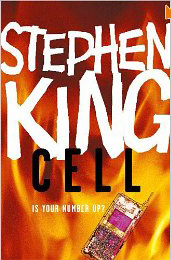
I think "The Stand" was my first King novel and I just fell in love, I fell in love with his writing style, with the depth of his ideas and found through his writing a love of the science fiction and horror genre's.  When asked what it is about King's work that I love so much I have to say it's the fact that what he writes about in books like The Stand and in this one Cell is the possibility that it could happen... and that in itself is the most terrifying idea of all.

The Cell is based on the premise that a virus could be transmitted by cell phone... Think about it... just for a moment, how many people have a mobile phone?  Millions? Billions?  What if an event happened that every one of those phones rang at the same moment and transmitted a virus and within hours everyone who received those calls either becomes insane or just dies?

Can you imagine that?  Can you conceive of such a thing?  

Well Stephen King does and he does it so well, so believably that it scared the living daylights out of me.   I read this book cover to cover in a matter of about 3 days and at nigh on 400 pages that's no small feat. I mean one does have to eat and feed other people.

But to me the overriding element I took away from this story was "love", the love of a man for his child, what he would go through, how far he would travel how hard he would search to find and save his son. 

This book is a must read although having said that you may never feel as comfortable answering your mobile phone again if you do read it.

I love books, anyone that has been following my blogs will know that one of my main loves in life is books. I love the way they feel, I love to be able to run my fingers over the pages and the tactile sensation of the paper. I love the slight roughness of the pages of a novel and I glory in the sensual quality of the pages in craft books, all glossy and smooth, it's a delicious sensation. I love the way a new book smells and that crinkling sound of the paper when I  turn the pages in a novel or the slight cracking sound as the spine gives way when you first open it. I adore the shushing sound of glossy pages as they give way for the first time as they slightly stick together when you pull them apart. The weight of a book in my hands is a special thing, it has substance and solidity that's so real.

So for me deciding to go paperless is a big thing,  giving up those delights in favour of being more "eco-efficient" feels like a big sacrifice. So having bought an iPad and installed the kindle apps I thought ok this is the time to bite the bullet and "do the right thing".

So imagine my annoyance when surfing through Amazon and the Apple store I find that going eco friendly is actually more expensive than continuing to purchase books the traditional way!!!! 

I don't actually get it,  it does not compute in my head.  I will, by buying digitally, no longer have a beloved book in my hands,  I will not be using paper, not killing a tree, not contributing to the carbon footprint of the "book" so why then should I pay more for the privilege?

Perhaps I was foolish in thinking that it would be cheaper to buy digitally as it has been in the case of music but it's not. At least with a traditional book it is possible to share the book or sell it on or give it away... This isn't possible with digital versions.   

So for the time being I think as eco unfriendly as it may be I will stick to buying my books in paper format. I don't see why I should give up the pleasure I find in real books if there isn't even the incentive of saving money. 

Rant concluded :)


Barbara Erskine is another favourite author of mine, I have enjoyed all of her books that I've read to date,  I like the way she managed to meld the modern day in with her historical fiction, time slipping between the two time periods.

In Daughters of Fire, Ms Erskine tells the story of two women, Cartimandua the young woman destined to lead her tribe, the Brigantes in Britain at the time of the Roman invasion of the islands and Viv Lloyd Rees who in the modern day is studying the history of Cartimandua and the Brigantes.

I did like the twists the story took and also the almost magical element that Ms Erskine injects with Viv having more and more detailed visions of Cartimandua and her life.   The premises melds the two worlds almost into one and it does feel like Viv is taking part in Cartimandua's life and world.

I did find myself taking sides with both Viv and Cartimandua, they're characters are so strong and vivid I couldn't seem to help myself but it did leave me feeling a loathing with some of the people who were trying to cause problems for them.

All in all it was a great book, thoroughly enjoyable and well worth a read.  It's definitely not Tolstoi but if you're like me and find him quite hard work to read then it's a bonus!


What can I saw that Stargate Universe had been cancelled I have to admit to mixed emotions... on the one hand I didn't enjoy the franchise as much as I had hoped I would.   Whilst it had the Stargate branding and the premise of gate travel was there underpinning the stories, that was about it.   The series promised much with big headliners like Lou Diamond Phillips and Robert Carlisle heading the bill it was promising to be a fantastic series but it got off to a really slow start, the whole of the first season was just warming up and getting to the meat of the story when it came to an end. 

I've found myself waiting and waiting and waiting..... you get the picture for the series to kind of get off the ground and to be frank... it hasn't.  So I am not really surprised that it's been cancelled.  

So what was wrong with Stargate Universe?  Why didn't it work for me?  Well it's quite a few things actually,  the whole premise of these people being trapped on a ship travelling through space with the odd drop off to investigate a planet was fine, definitely down with that, sounded exciting but the reality was the writers missed a trick, the planets were dull, most of them deserted, very little in the way of sentient life and just the odd dodgy creature that was more insectlike than anything else. 

Now I recognise this is probably the reality of what space is like, there probably is very little out there that would be of interest but that kind of doesn't work on television and isn't going to keep viewers watching. Sometimes honesty is a little too dull in truth.
 
So what else bugged me?  Well actually it was the lack of progress of the actual story,  we never seemed to find out why this bunch of aliens were following the Destiny or why the drones were lying in wait to try and blow the ship out of the sky.  We also never found out where Destiny was actually going.   I think it was this lack of actual destiny that was part of the problem,  we weren't given enough breadcrumbs to keep the story interesting or in the end even to care where the Destiny was going.

The final episode has to be the most disappointing of all, now whether they knew that the franchise had been cancelled or not when they made it I don't know but the last programme was either made with the intentions of making another season or it was just a throw away, we don't really care about being fair to the viewers because it did nothing to either progress the story or answer any questions.  Ending as it does with Eli standing alone on the bridge of the Destiny as she flies off into the darkness of space.

Errrr.... What?  There's nothing, no answers to any of the questions that have been raised throughout the whole thing...  it just stops! That's it! Finis! End! Goodbye!

A thoroughly disappointing let down.